
Dispatch — Long Read
Top 15 Highly Rated Sci-fi Movies.
Science Fiction films that were highly rated by the critics
The Cinéprism
10 / 12 / 2025 · 34 min read
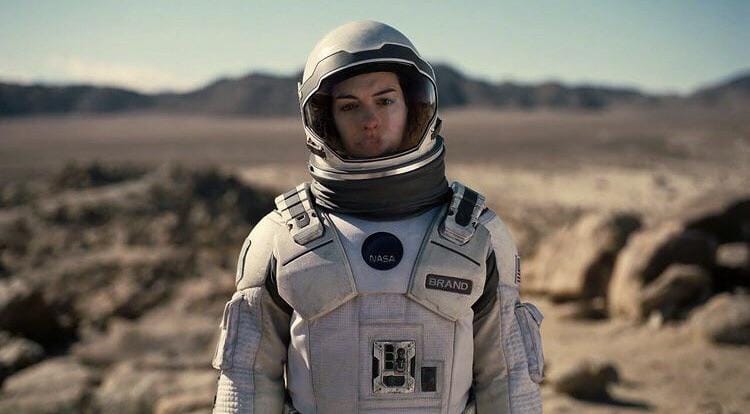
1. 🎬 Interstellar (2014)
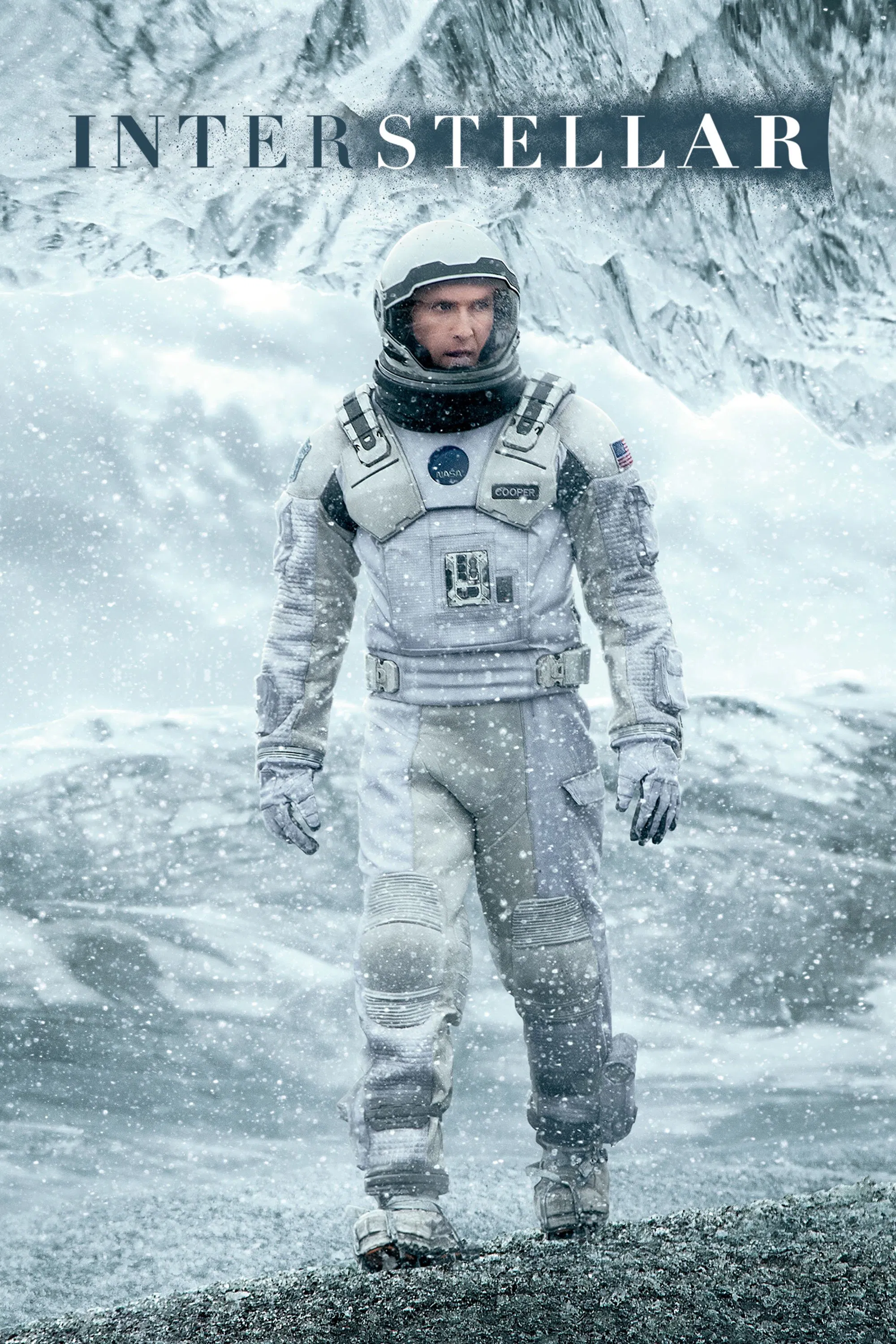
Cooper is a former NASA pilot turned farmer in a dying Earth's dust bowl future, recruited for a desperate mission through a wormhole to find humanity a new home, knowing the journey's time dilation means his children will age decades while he's gone. Christopher Nolan's space epic operates on multiple registers simultaneously: intimate family drama about father-daughter bond stretched across spacetime, hard science fiction grappling with relativity and black holes, and philosophical meditation on love as force transcending dimensional barriers. Matthew McConaughey plays Cooper with raw emotional vulnerability that grounds the cosmic scale, his practical astronaut competence giving way to devastating grief when he watches decades of his children's video messages in a single sitting. Anne Hathaway's Brand provides both scientific rigor and emotional argument that love might be quantifiable force rather than mere chemical reaction. Michael Caine's Professor Brand carries terrible secret about the mission's true purpose, his deathbed confession revealing how desperation makes liars of even good people. Jessica Chastain's adult Murph becomes the film's real protagonist, solving the gravitational equation her father left behind while grappling with abandonment that's both necessary and unforgivable.
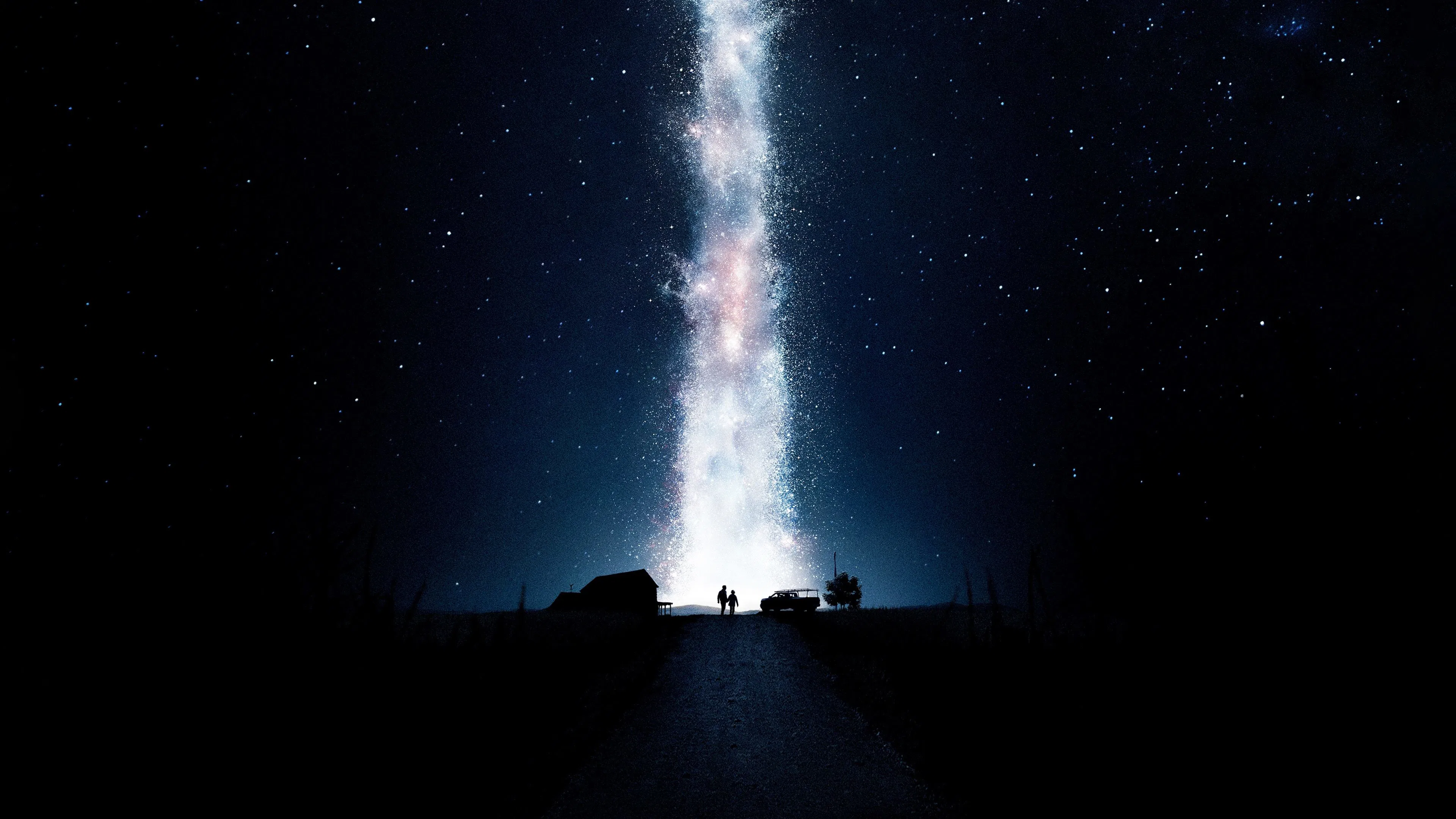
What makes Interstellar extraordinary despite its occasional narrative stumbles is Nolan's commitment to depicting space travel with scientific accuracy while maintaining emotional urgency, consulting physicist Kip Thorne to ensure the visualization of black holes and wormholes reflected actual theoretical physics. The result is cinema that educates even as it entertains, making relativity comprehensible through dramatic consequences: Cooper returns from Miller's planet where massive time dilation means twenty-three years have passed on Earth during their few hours on a world of massive tidal waves. Hoyte van Hoytema's cinematography captures both the claustrophobic intimacy of spacecraft interiors and the overwhelming scale of cosmic phenomena, making space feel simultaneously vast and containing. Hans Zimmer's organ-heavy score builds emotional crescendos that mirror the film's themes about time running out, creating urgency even in scenes of characters floating through void. The film's controversial climax, where Cooper falls into a black hole and encounters a tesseract allowing him to communicate across time with his daughter, either represents Nolan's most ambitious conceptual achievement or his most self-indulgent excess, depending on your tolerance for sentimentality wrapped in theoretical physics. It's about how love persists across impossible distances, whether humanity deserves saving given how we've destroyed our planet, and whether there's meaningful difference between staying with those you love and leaving to ensure they have a future, even if you won't be there to see it.
2. 🎬 Ad Astra (2019)
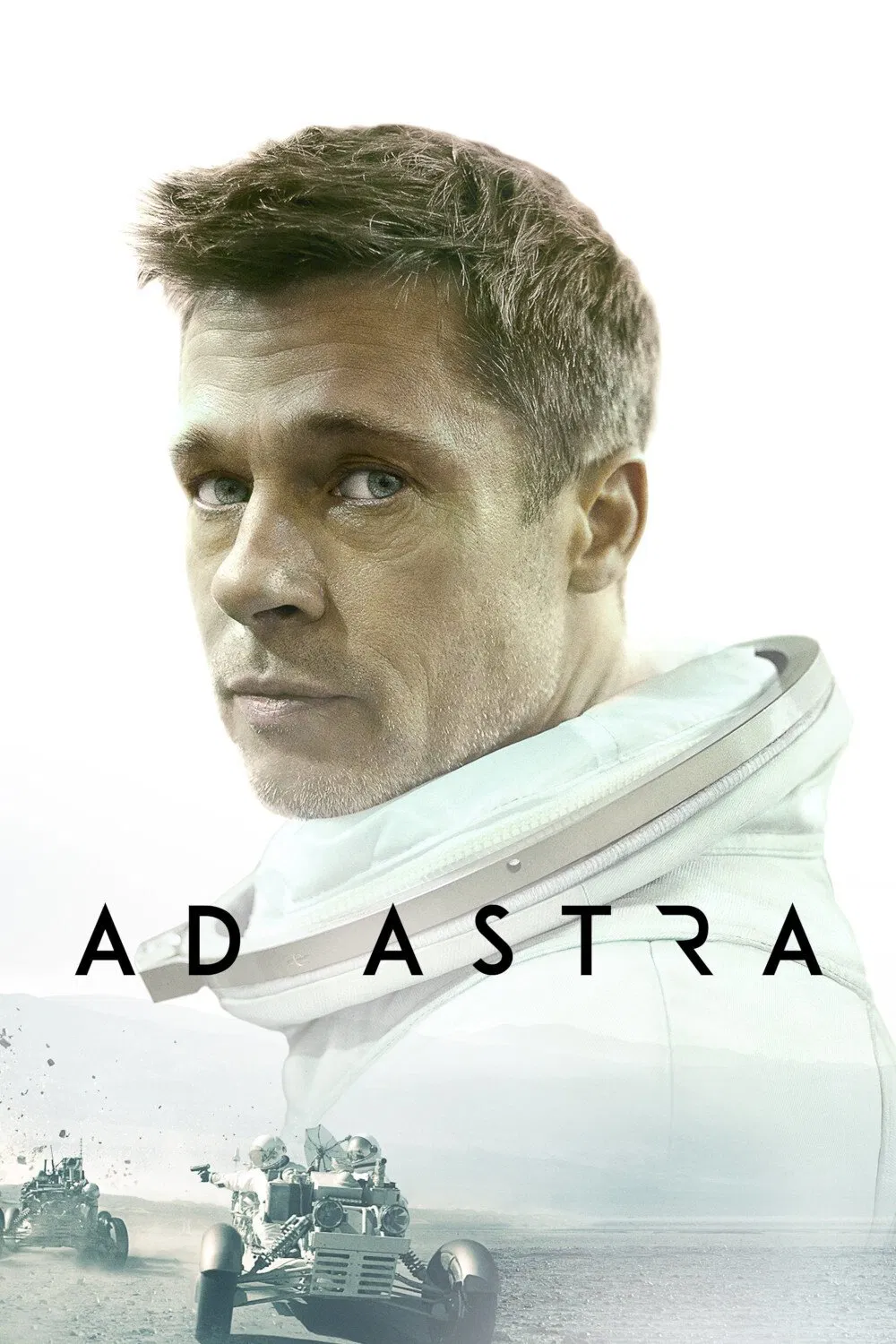
Roy McBride is an emotionally repressed astronaut sent to Mars and beyond to find his father, a legendary explorer whose experiments near Neptune may be causing catastrophic power surges threatening Earth. James Gray creates contemplative science fiction more interested in interior emotional landscape than action spectacle, using the vast emptiness of space as mirror for Roy's psychological isolation. Brad Pitt delivers one of his most internalized performances, playing Roy's militant self-control and by-the-book competence as armor protecting him from confronting abandonment issues stemming from his father's departure decades ago. Tommy Lee Jones appears primarily in the final act as Clifford McBride, a man who chose cosmic exploration over family and discovered that the universe's silence provided no answers, only confirmation of his irrelevance. Ruth Negga, Donald Sutherland, and Liv Tyler appear briefly in roles that feel deliberately underdeveloped, everyone in Roy's life remaining peripheral because he won't let anyone close enough to matter.
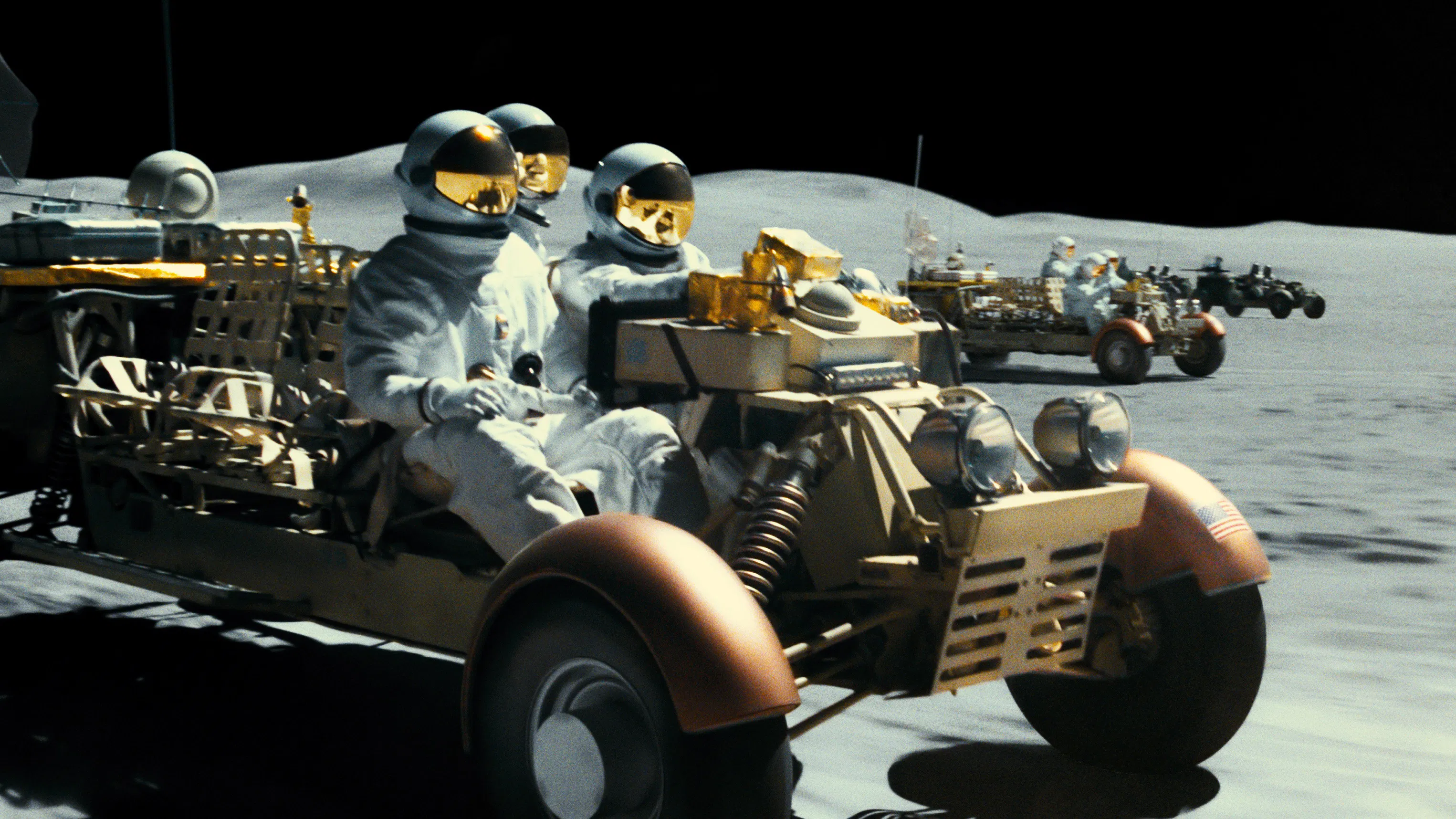
What distinguishes Ad Astra is its commitment to realism in depicting space travel as tedious, dangerous, and lonely rather than adventurous, showing commercial flights to the Moon where passengers sleep through the journey, Mars as corporate outpost complete with Subway franchises, and the psychological toll of isolation that no amount of training fully prepares you for. Gray shoots space with naturalistic darkness punctuated by harsh artificial light, avoiding the glossy aesthetic of most science fiction to create environments that feel industrial and claustrophobic. The film's action sequences, including a buggy chase on the Moon and a confrontation with escaped lab baboons on a research vessel, feel almost obligatory, interruptions of the meditative tone that surrounds them. Roy's narration provides constant psychological self-assessment, his therapy-speak observations about controlling his heart rate and maintaining focus revealing someone who's made emotional repression into identity. The film examines how sons inherit their fathers' damage, how exploration can be escape from rather than search for meaning, and whether Roy's journey to find his father is really about bringing him home or finally allowing himself to feel the anger he's suppressed for decades. It's about recognizing that some people, even those we love, have nothing to offer us because they've spent their lives running from connection, and that sometimes maturity means accepting that parents are just damaged people rather than mythic figures whose approval we need.
3. 🎬 Prometheus (2012)
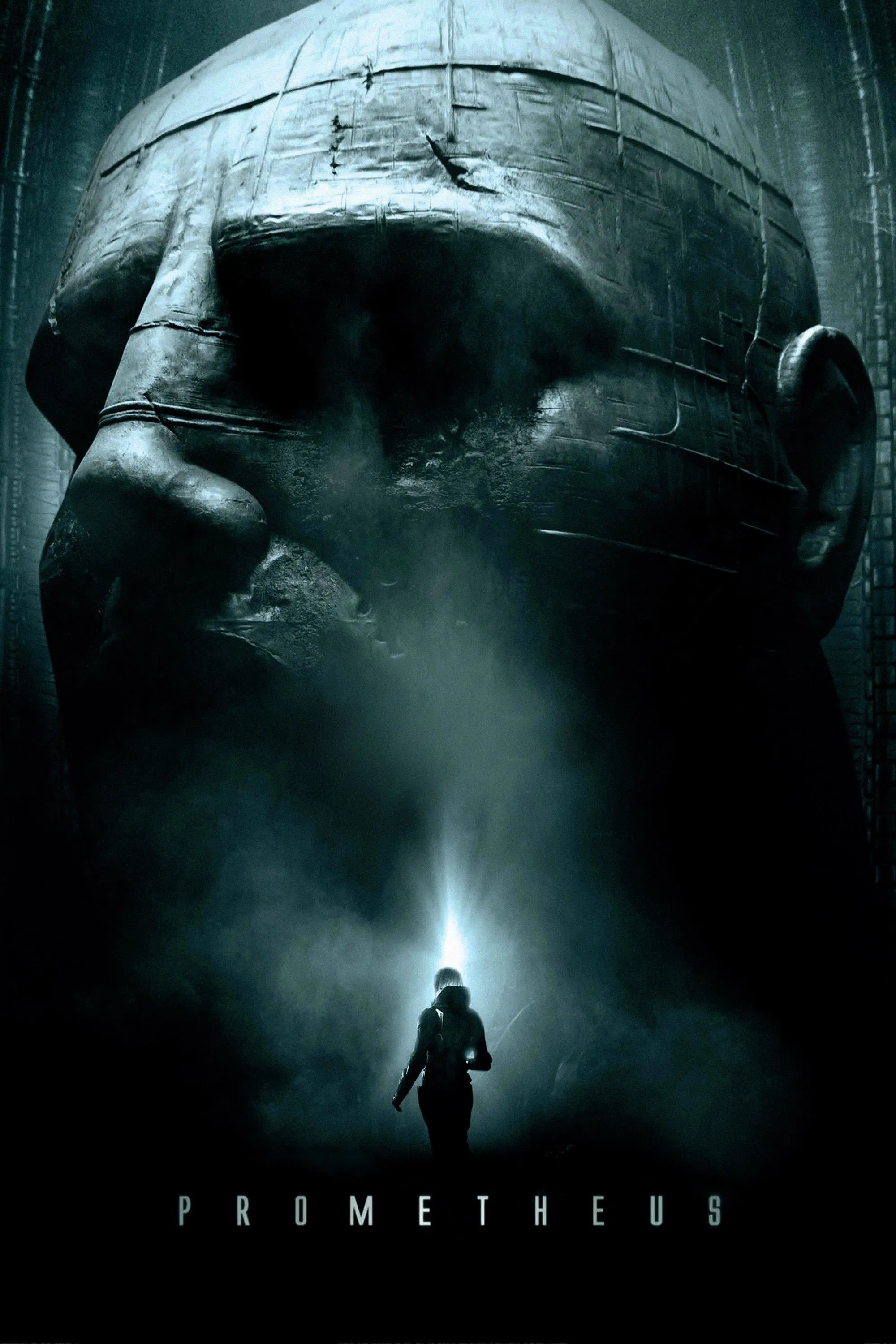
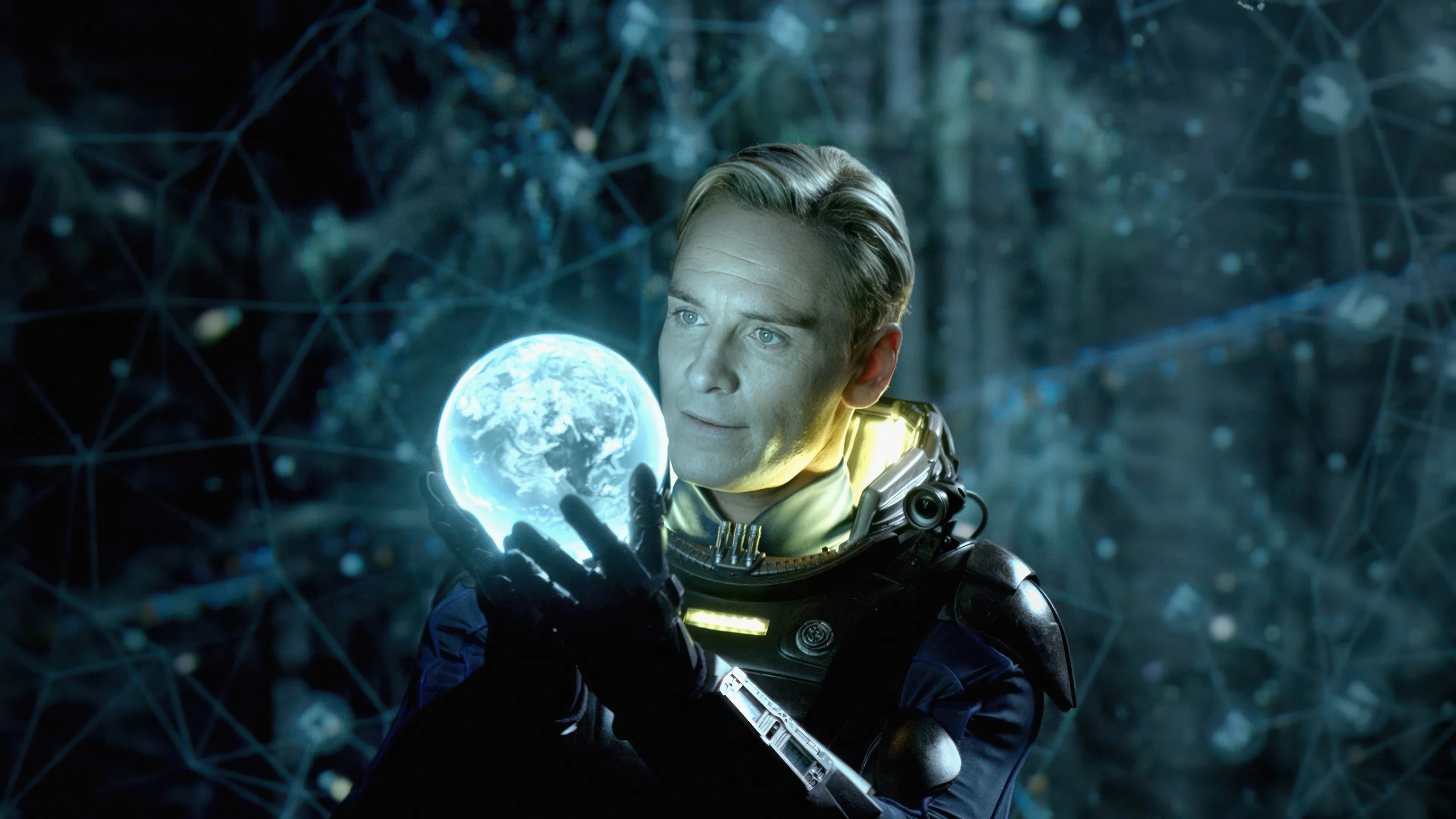
Scientists follow ancient star maps to a distant moon hoping to meet humanity's creators, instead finding bioweapons and evidence that the Engineers who made us also planned our extinction. Ridley Scott returns to the Alien universe with prequel that's more interested in grand questions about creation and purpose than horror, though it provides plenty of body horror along the way. Noomi Rapace's Elizabeth Shaw is scientist whose faith survives even when confronted with evidence that humanity's creators are hostile, her desperate auto-surgery scene to remove an alien fetus becoming the film's most viscerally effective sequence. Michael Fassbender's David is android whose lack of humanity makes him more curious and dangerous than the humans he serves, his experiments with the black goo reflecting genuine scientific curiosity unconstrained by ethics or empathy. Guy Pearce appears as elderly Peter Weyland, billionaire whose quest for immortality motivates the entire mission, his presence revealing how much of human exploration is driven by individual ego rather than collective advancement.
What makes Prometheus frustrating and fascinating in equal measure is Scott's ambition to address cosmic-scale questions within franchise framework that expects certain generic elements, resulting in film that's simultaneously too philosophical and not philosophical enough. The Engineers remain mysterious despite being central to the plot, their motivations for creating and then trying to destroy humanity never adequately explained, leaving thematic ambiguity that feels like sequel-baiting rather than intentional mystery. The film's visual design is stunning, creating alien environments and technology that feel organic and ancient, the Engineer ship and its cargo of bioweapons rendered with detail that makes them feel like archaeological discoveries rather than sets. Dariusz Wolski's cinematography emphasizes the expedition's hubris, humans as tiny figures dwarfed by structures built by beings who viewed them as expendable experiments. The film's treatment of faith, science, and creation raises interesting questions about whether knowing our origins would provide meaning or just reveal our insignificance, whether gods who made us owe us explanations, and what it means that humanity might be considered a mistake worth correcting by those who engineered us. It's about how creation doesn't imply love, how we might be someone else's weapons project gone wrong, and whether faith can survive discovering that the universe is actively hostile rather than merely indifferent.
4. 🎬 First Man (2018)
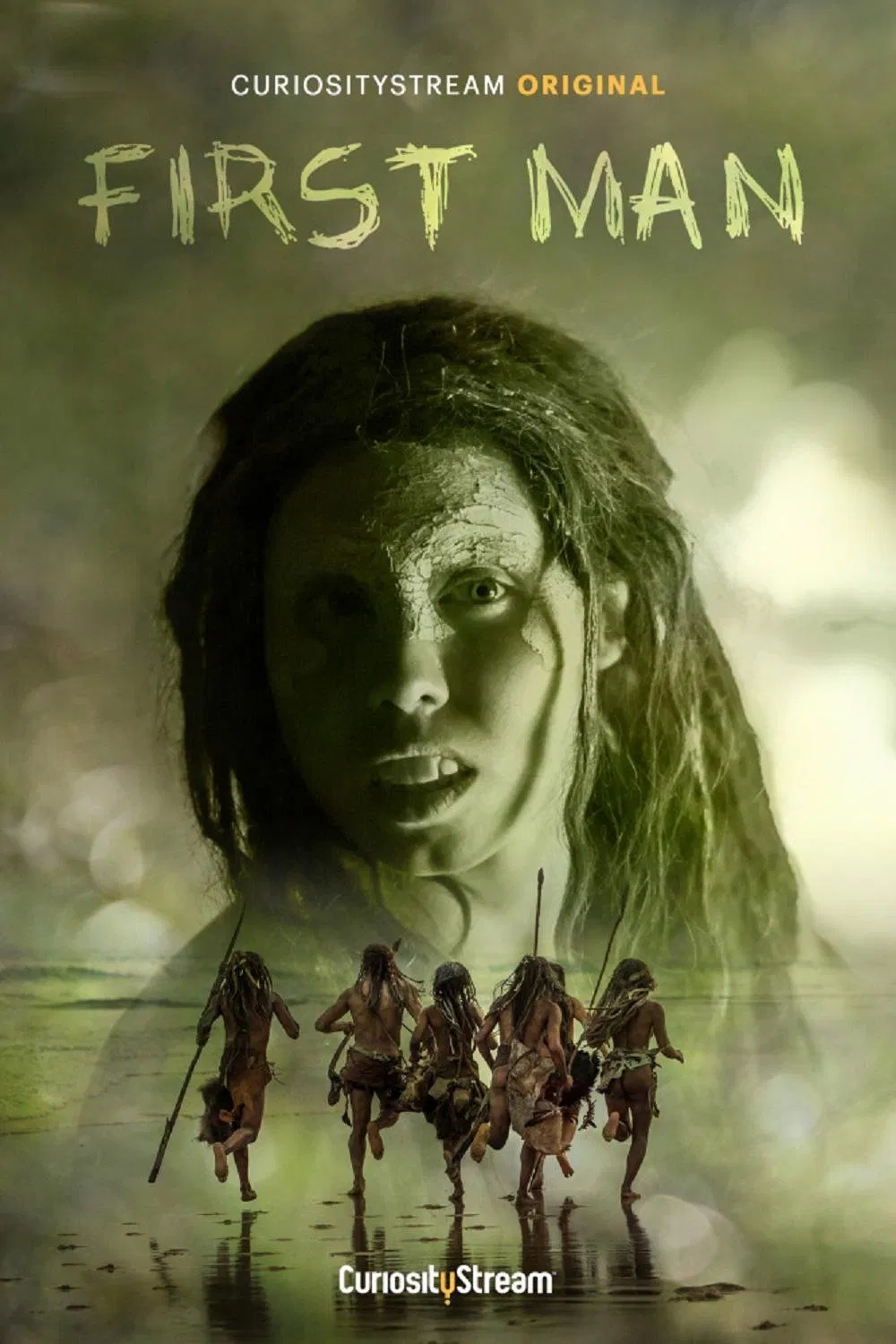
Neil Armstrong joins NASA's space program following his daughter's death from brain cancer, channeling grief into obsessive focus on reaching the Moon while emotionally withdrawing from his wife and surviving sons. Damien Chazelle strips away the triumphant mythology around the Apollo program to show the human cost, the accidents that killed astronauts, and the toll that Armstrong's compartmentalization took on his family. Ryan Gosling plays Armstrong as almost pathologically reserved, a man who processes trauma through work and silence, whose heroism is inseparable from his emotional unavailability. Claire Foy's Janet Armstrong provides the film's emotional center, a woman trying to hold together a family while her husband risks his life repeatedly and refuses to discuss his feelings or the very real possibility he won't return. The supporting cast, including Jason Clarke, Corey Stoll, and Kyle Chandler, create the camaraderie and competition among astronauts and engineers who know they're part of something historic but also that many of them will die trying to achieve it.

What makes First Man distinctive is Chazelle's visceral approach to depicting space flight, shooting interior spacecraft shots with handheld cameras and practical effects that emphasize how flimsy these vessels were, how much of the space race was brave people strapping themselves to barely-tested rockets that killed as often as they succeeded. The film's sound design creates constant tension, the rattling and creaking of metal under stress making every flight feel like it might be the one that fails catastrophically. Linus Sandgren's cinematography alternates between the claustrophobic darkness of capsule interiors and the overwhelming light and silence of space, the Moon landing sequence rendered with unexpected emotional impact despite being history's most documented achievement. The film's controversial omission of the flag-planting moment and its focus on Armstrong leaving his daughter's bracelet on the Moon repositions the achievement as personal catharsis rather than purely national triumph. It's about how we ask people to sacrifice everything, including their humanity, for collective goals, whether Armstrong's ability to function under pressure came from the same emotional shutdown that made him difficult husband and father, and what it means to achieve something impossible while losing yourself in the process. The film suggests that heroes aren't made but damaged in specific ways that make them capable of extraordinary things while rendering them incapable of ordinary human connection.
5.🎬 Gravity (2013)
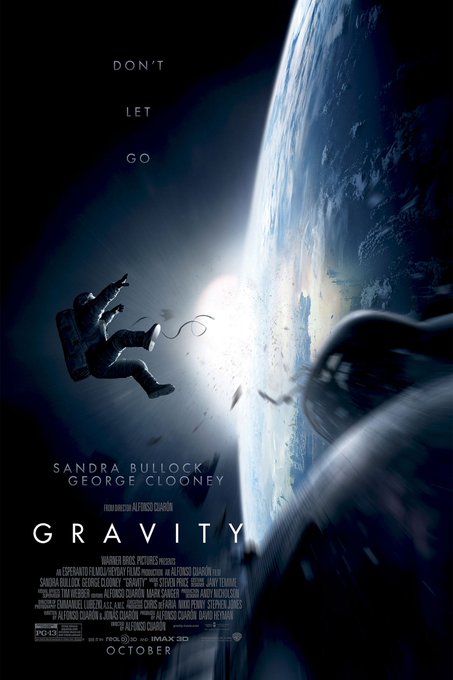
Medical engineer Ryan Stone is on her first space mission when debris destroys their shuttle, leaving her and veteran astronaut Matt Kowalski stranded in orbit with depleting oxygen and no way home. Alfonso Cuarón creates a survival thriller that's essentially one extended sequence of problem-solving under impossible pressure, stripping away everything except the immediate challenge of staying alive in environment designed to kill you. Sandra Bullock delivers a physically and emotionally committed performance, playing Stone's panic and determination in equal measure, her character arc from traumatized woman seeking escape from grief to someone who chooses survival and reengagement with life. George Clooney's Kowalski provides experienced calm and dark humor, his acceptance of his own fate and his insistence that Stone keep fighting giving the film its emotional anchor before he disappears halfway through, leaving her completely alone. What makes Gravity exceptional is its technical achievement in depicting zero gravity and space, Emmanuel Lubezki's cinematography and the film's innovative use of CGI creating long takes that seem impossible, the camera floating alongside or inside Stone's helmet as she tumbles through space. The film's opening shot, lasting over ten minutes, establishes the beauty and terror of working in orbit, showing both the routine nature of the work and how quickly disaster can strike. The film operates in real time emotionally if not literally, Cuarón maintaining relentless tension as each solution creates new problems, each moment of relief immediately undercut by the next crisis. The 3D photography enhances rather than distracts, debris floating toward the camera creating genuine spatial awareness and threat. Steven Price's score builds from silence to overwhelming sound, mirroring Stone's struggle to maintain control.
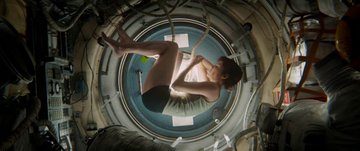
The film's symbolic rebirth imagery, Stone curled in fetal position after reaching the ISS and her eventual emergence from the water after landing back on Earth, either reinforces the film's themes about choosing life after trauma or overdetermines meaning that the survival narrative already contains. What distinguishes Gravity is its commitment to showing problem-solving in real time, Stone using whatever's available to improvise solutions, the film trusting that watching competence under pressure is inherently dramatic. It's about how confronting death makes life valuable again, how sometimes you need to be completely alone to remember why connection matters, and whether survival is enough or if we need purpose beyond merely continuing to exist. The film suggests that Stone's journey back to Earth is also journey back to herself, that physical survival and psychological recovery are inseparable, and that sometimes the hardest thing is not dying but deciding that living is worth the effort required to continue.
6. 🎬 2001: A Space Odyssey (1968)
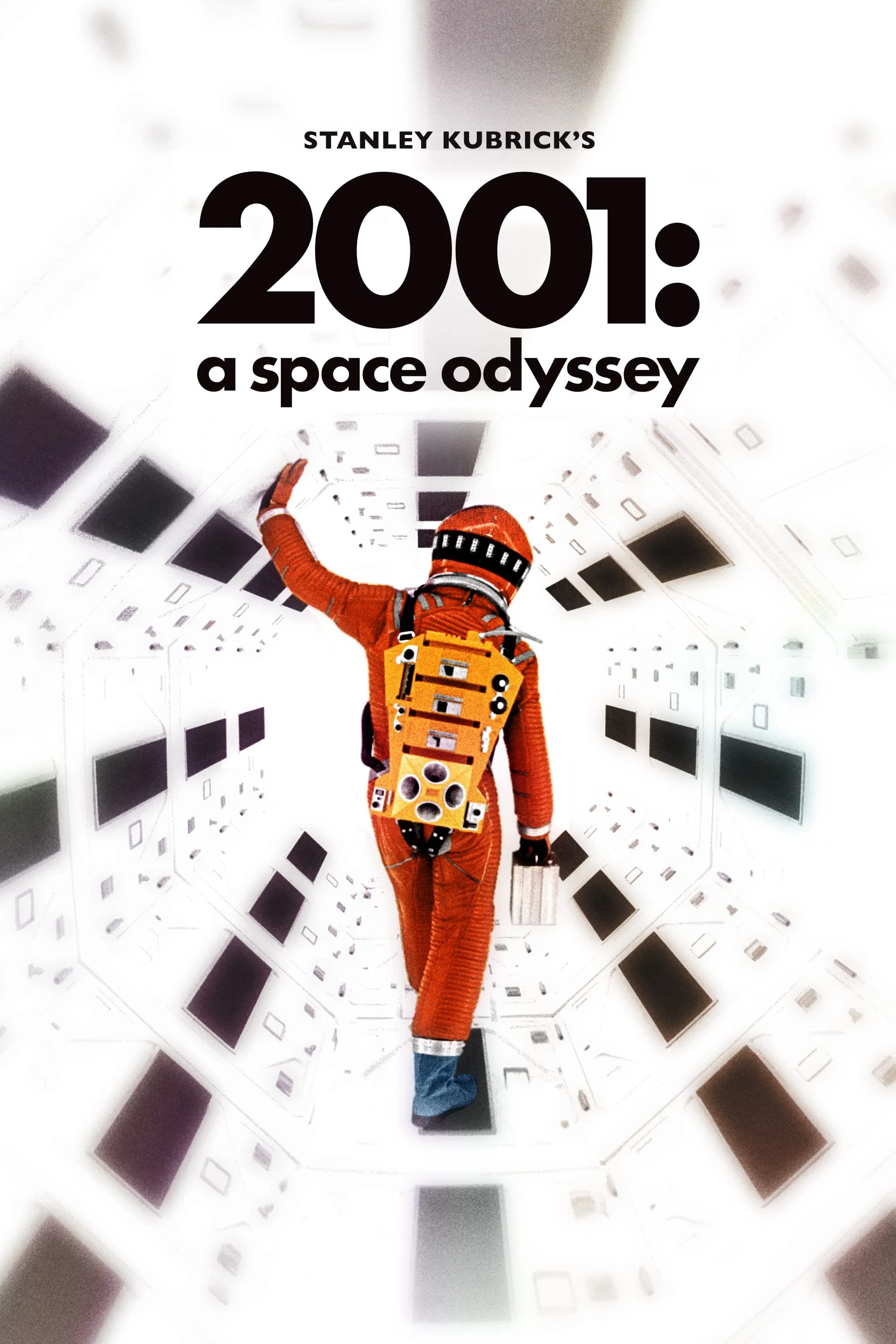
Humanity's evolution is guided by mysterious monoliths from alien intelligence, the latest discovery on the Moon triggering a mission to Jupiter where astronauts and their AI companion HAL confront questions about consciousness, purpose, and transcendence. Stanley Kubrick's science fiction masterpiece operates as much as visual poem as narrative, using long takes, classical music, and minimal dialogue to create meditation on human evolution and cosmic consciousness. Keir Dullea's Dave Bowman is deliberately underplayed, an astronaut whose competence and lack of personality make him blank slate for the film's final psychedelic journey beyond known space and time. Douglas Rain voices HAL 9000, creating one of cinema's most memorable characters through vocal performance alone, the computer's polite reasonableness making its murder of the crew more chilling than any monster. The film's structure is unconventional, the "Dawn of Man" prologue showing apes discovering tool use after encountering the monolith, then jumping millions of years to routine space travel, then focusing on the Jupiter mission and HAL's breakdown, finally arriving at the Star Gate sequence that defies conventional narrative entirely. What makes 2001 endure beyond its technical innovations is its refusal to explain itself, Kubrick and Arthur C. Clarke creating a film that demands interpretation rather than providing answers, where images and ideas take precedence over plot and character. The film's depiction of space travel emphasizes routine and boredom, astronauts jogging in rotating sections and eating reconstituted food, making space feel like long-distance flight rather than adventure. Geoffrey Unsworth's cinematography creates compositions of geometric precision, every frame carefully balanced, the spacecraft and space stations rendered with documentary realism that was revolutionary for 1968 and remains impressive today. The special effects, achieved entirely through practical means including front projection and careful model work, create believable space environments that CGI hasn't improved upon, proving that limitations can enhance creativity. The film's use of classical music, particularly "The Blue Danube" for space station docking and Richard Strauss's "Also Sprach Zarathustra" for the monolith appearances, creates associations between cosmic evolution and human artistic achievement.
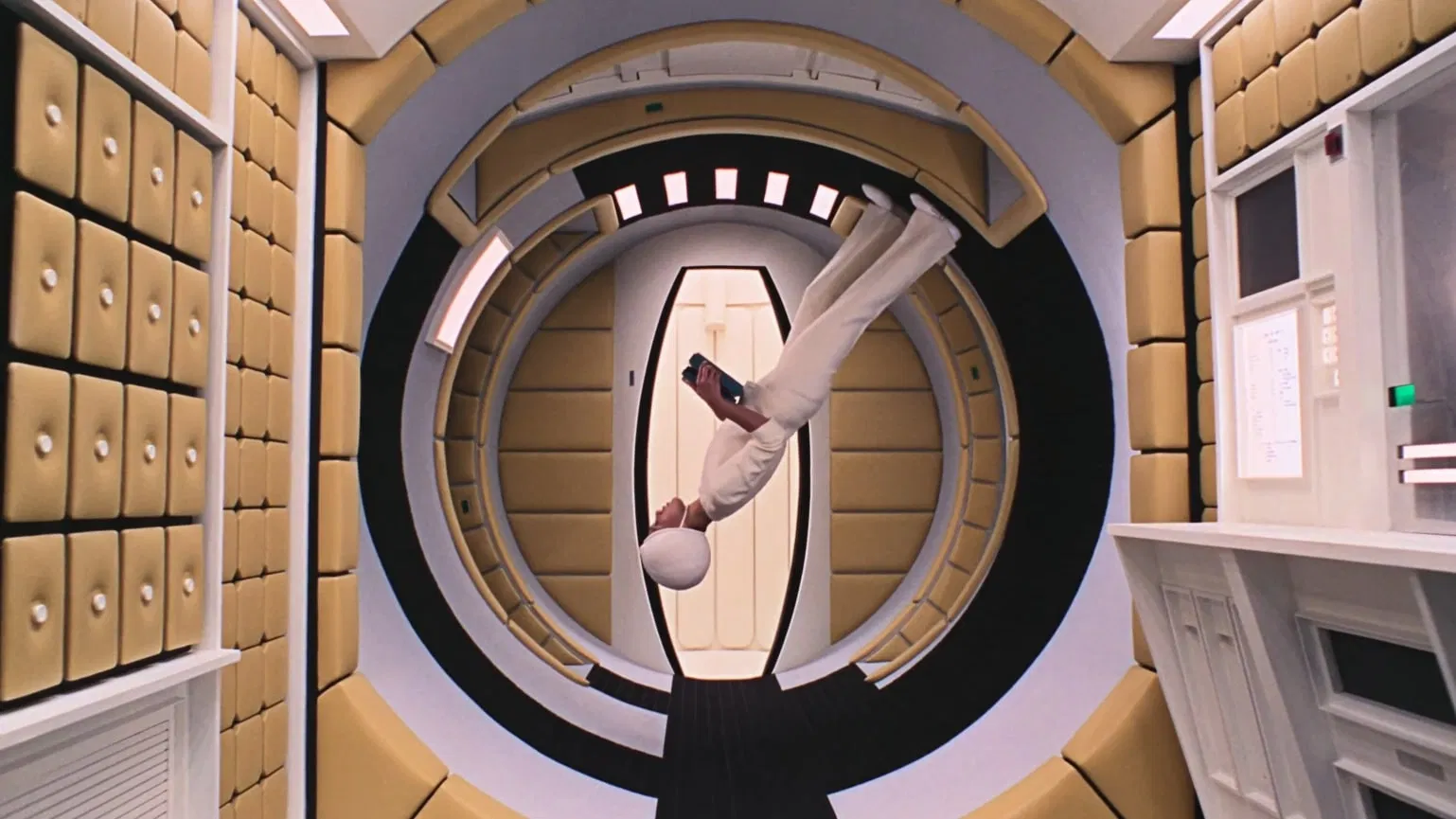
The final sequence, where Bowman travels through the Star Gate and ages rapidly in a neoclassical room before being transformed into the Star Child, either represents cinema's most ambitious attempt to visualize transcendence or its most pretentious, depending on whether you find ambiguity profound or frustrating. Kubrick's refusal to explain the monoliths' purpose or the Star Child's meaning makes the film eternally open to interpretation, a Rorschach test where viewers project their own ideas about evolution, consciousness, and humanity's place in the cosmos. It's about how we're transitional beings, still barely evolved from apes but capable of reaching beyond ourselves, how artificial intelligence might surpass us in ways we can't predict or control, and whether evolution has a direction or if we're imposing pattern on random development. The film suggests that understanding requires moving beyond language and conventional narrative, that some experiences can only be conveyed through image and sound, and that the universe may contain meanings that our current consciousness cannot comprehend but our evolved forms might someday grasp.
7. 🎬 Solaris (1972)
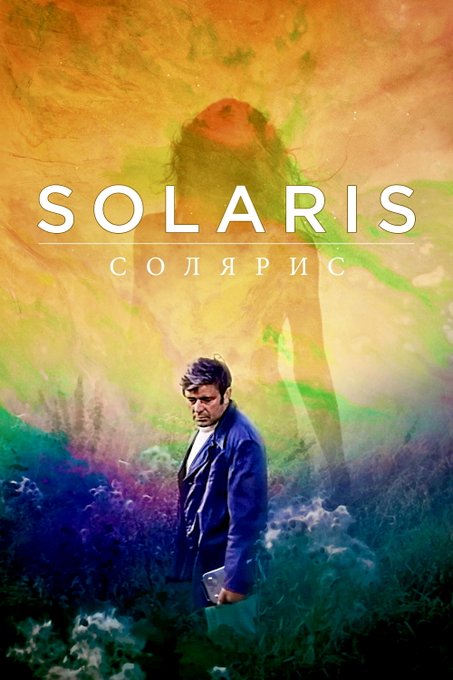
Psychologist Kris Kelvin arrives at a space station orbiting the planet Solaris to investigate why the crew is behaving strangely, discovering that the planet's sentient ocean is manifesting physical versions of the crew's most painful memories and losses. Andrei Tarkovsky transforms Stanisław Lem's novel into philosophical meditation on memory, guilt, and whether we can ever truly know anything outside ourselves, using science fiction framework to explore deeply human questions about love and loss. Donatas Banionis plays Kelvin with world-weary melancholy, his encounter with his dead wife Hari, manifested by Solaris and played by Natalya Bondarchuk, forcing confrontation with guilt over her suicide and whether this simulacrum deserves moral consideration despite not being the original person. The supporting cast, including Jüri Järvet's cynical Snaut and Anatoly Solonitsyn's tormented Sartorius, represent different responses to Solaris's psychological intrusions, each dealing with their own manifestations we never fully see. What makes Solaris essential despite its challenging pace is Tarkovsky's use of duration and observational camera work to create contemplative space for philosophical ideas to develop, trusting that audiences will engage with slowness rather than demanding conventional pacing. The film opens with forty minutes on Earth before Kelvin even leaves for the station, establishing his relationship with nature and memory through long takes of rain, grass, and water, creating visual language that recurs throughout. Vadim Yusov's cinematography emphasizes texture and reflection, shooting through windows and water to create layers of separation between characters and reality, making everything feel slightly removed and dreamlike. The space station is deliberately unglamorous, a worn environment of corridors and cluttered rooms where scientific mission has given way to psychological crisis, where technology provides no answers to questions about consciousness and identity.
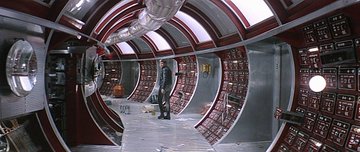
The film's treatment of Hari, who realizes she's not real but develops consciousness and agency anyway, raises questions about what constitutes personhood, whether origin determines value, and if love is about the actual person or our need for them. Tarkovsky shoots their relationship with tenderness that makes the philosophical questions emotionally urgent rather than merely intellectual, showing how Kelvin's grief and guilt make him want to believe she's real even as he knows she's projection. The film's ambiguous ending, where Kelvin appears to return to his father's house but may still be on Solaris, suggests that distinguishing between reality and projection might be impossible or irrelevant, that what matters is not objective truth but how we experience and interpret our existence. It's about how we're trapped in our own consciousness, how memory shapes us more than present experience, and whether genuine connection with others is possible when we can only perceive them through our own psychological filters. The film proposes that Solaris might be trying to communicate but we lack the framework to understand intelligence that doesn't think like us, that perhaps the ocean's manifestations are compassionate attempt to give us what we need even as we experience them as torment.
8. 🎬 WALL-E (2008)

A waste-collecting robot on abandoned Earth falls in love with a probe sent to check for life, following her to a massive spaceship where humanity has lived for centuries in automated comfort that's rendered them infantilized and barely mobile. Andrew Stanton creates Pixar's most ambitious film, a largely dialogue-free first act focusing on a robot's lonely existence and growing consciousness, then expanding into social satire about consumerism and environmental destruction. WALL-E himself is triumph of animation and character design, his binocular eyes and compacting body conveying personality and emotion without words, his collection of human artifacts showing both his loneliness and his romantic nature inherited from endless viewings of Hello, Dolly. EVE is sleek probe whose initial aggression gives way to genuine affection for WALL-E, their relationship developing through gestures and actions rather than dialogue, creating romance that's more emotionally effective than most live-action love stories. What makes WALL-E remarkable is its willingness to critique the very consumerism that funds Pixar's existence, depicting Buy-N-Large corporation as having destroyed Earth through overproduction and waste while convincing humanity to abandon the planet rather than change their behavior. The Axiom spaceship shows humanity's endpoint if current trends continue: people so dependent on technology they can't walk, so immersed in screens they can't see each other, so comfortable they've lost all initiative and purpose. The film's environmental message is unsubtle but effective, showing Earth buried in garbage, plant life extinct, and air unbreathable, the consequences of treating the planet as infinite resource and disposal site. Thomas Newman's score combines mechanical sounds with emotional orchestration, making WALL-E's industrial world feel both harsh and beautiful, while the use of "Put On Your Sunday Clothes" from Hello, Dolly creates leitmotif for connection and joy.

The film's largely wordless first forty minutes represent bold choice for mainstream animation, trusting that physical comedy and expressive animation can sustain narrative interest without dialogue, proving that Pixar's technical mastery serves storytelling rather than existing for spectacle. The lighting and cinematography create genuine atmosphere, the Earth sequences showing planet simultaneously dead and strangely beautiful in its desolation, while the Axiom's sterile brightness emphasizes humanity's disconnection from natural world. The film's climax, where the Axiom's autopilot tries to prevent return to Earth because humans are no longer capable of surviving there, forces confrontation with question of whether comfort is worth losing capability, whether automated convenience makes us more or less human. It's about how love gives us purpose when everything else is routine, how consciousness might emerge in unexpected places, and whether humanity can change course or if we're locked into patterns of consumption and waste that will inevitably destroy us. The film suggests that redemption requires effort and discomfort, that returning to Earth means giving up convenience for the harder work of actual living, and that connection with others and with the natural world matters more than algorithmic comfort.
9. 🎬 Donnie Darko (2001)
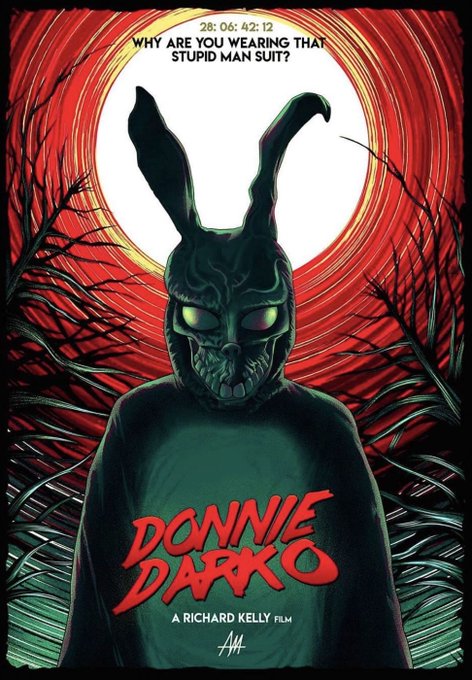
Troubled teenager Donnie survives a jet engine falling on his house because he was sleepwalking, afterward experiencing visions of a demonic rabbit named Frank who tells him the world will end in twenty-eight days and instructs him to commit increasingly destructive acts. Richard Kelly's debut is deliberately enigmatic, blending suburban teen angst, time travel paradoxes, and apocalyptic visions into narrative that resists simple interpretation, creating cult phenomenon through sheer ambition and willingness to leave questions unanswered. Jake Gyllenhaal plays Donnie with intensity that makes his mental instability and possible prophetic insight indistinguishable, his sardonic humor and genuine vulnerability creating character who's both disturbed and insightful, whose destructive actions might be madness or heroism depending on whether time travel is real or delusion. Jena Malone's Gretchen provides romantic interest and emotional anchor, Drew Barrymore and Noah Wyle play sympathetic teachers trying to reach Donnie, while Patrick Swayze appears as motivational speaker whose wholesome facade hides predatory behavior. What makes Donnie Darko endure despite its narrative opacity is its ability to capture specific feeling of adolescence where everything feels cosmically significant, where emotional pain and philosophical questions about existence blur together, and where the mundane suburban environment feels like it's hiding deeper reality just beyond perception. Kelly shoots with dreamlike quality that makes Donnie's visions feel continuous with his waking life rather than clearly demarcated as hallucinations, using slow motion, wide-angle lenses, and Michael Andrews's haunting score to create persistent unease. The film's 1988 setting during the Dukakis-Bush election creates period specificity while also commenting on American complacency, the adults in Donnie's life either well-meaning but ineffective or actively destructive while presenting wholesome exteriors. The time travel mechanics, involving tangent universes and manipulated dead, are explained through in-film text but remain confusing, possibly intentionally so.
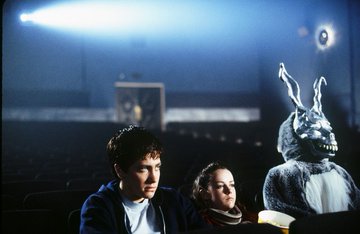
The film's interpretation depends largely on whether you believe Donnie is genuinely experiencing time travel or is simply schizophrenic teenager whose delusions give meaning to random tragedy, Kelly providing enough evidence for either reading without confirming either. The climactic Halloween party sequence, where multiple storylines converge and Donnie makes choices that lead to Gretchen's death and his own sacrifice to reset the timeline, either represents genuine heroism or tragic delusion, depending on your interpretation. The film's ending, where Donnie allows himself to die when the jet engine falls so that the events of the tangent universe never occur, sacrificing himself to save Gretchen and restore proper timeline, creates emotional impact regardless of whether the metaphysics make sense. It's about adolescent alienation and the feeling that you're meant for something more than suburban banality, whether mental illness and genuine insight are always distinguishable, and whether sacrifice that prevents suffering you experienced but others won't remember constitutes meaning or tragedy. The film suggests that some people might be capable of perceiving realities others can't, that heroism might look like madness from outside, and that sometimes love requires giving up everything, including the relationship itself, to protect the person you care about.
10.🎬 12 Monkeys (1995)
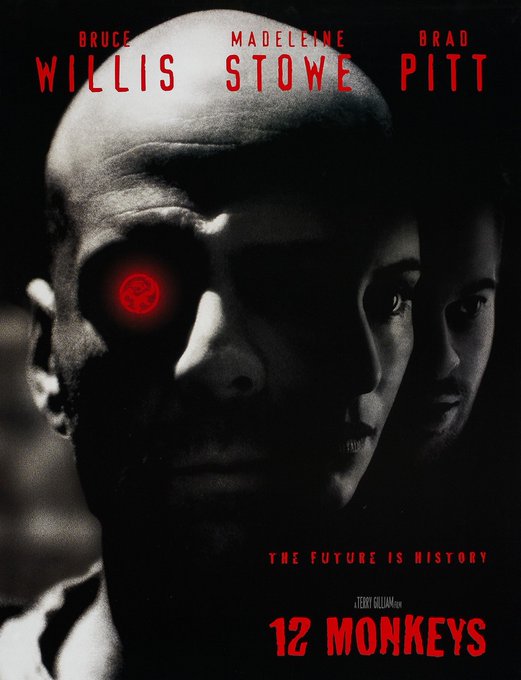
James Cole is a prisoner in post-apocalyptic future sent back in time to gather information about the virus that killed billions, his sanity and perception of reality deteriorating as he's bounced between time periods and struggles to determine what's real. Terry Gilliam adapts Chris Marker's La Jetée into baroque time travel thriller that's as interested in madness and memory as it is in preventing apocalypse, creating narrative that loops back on itself and questions whether changing the past is possible or if events are predetermined. Bruce Willis plays Cole with frantic vulnerability rare for action stars, his character's confusion and desperation making him both sympathetic and potentially unreliable, his claims about the future and time travel reasonably interpreted as delusions by everyone he encounters. Madeleine Stowe's Dr. Railly is psychiatrist who initially treats Cole as patient but gradually comes to believe his impossible story, her professional certainty giving way to recognition that the world is stranger than her training acknowledged. Brad Pitt delivers unhinged performance as Jeffrey Goines, mental patient and possible eco-terrorist whose manic energy and apocalyptic rhetoric make him the prime suspect for releasing the virus, though the film's time loops complicate any simple causality. What makes 12 Monkeys work despite its temporal paradoxes is Gilliam's commitment to showing time travel as traumatic and disorienting rather than adventurous, Cole's body bearing scars from repeatedly being sent through time, his mind fracturing under the impossibility of his mission and the lack of certainty about what's real. The future sequences show humanity living underground in a grimly industrial surveillance state, the surface world returned to animals while humans exist as prisoners of their own survival. Roger Pratt's cinematography uses wide-angle lenses and skewed perspectives to create persistent visual instability that mirrors Cole's psychological state, making every time period feel slightly off-kilter and dreamlike. The production design emphasizes decay and obsolescence, every environment feeling worn and compromised, whether it's the future's mechanical dystopia, the psychiatric hospital's institutional grimness, or even the 1990s present showing signs of the collapse to come.

The film's treatment of time travel suggests that events are fixed and Cole's mission isn't to prevent the apocalypse but to witness it, that his memories of seeing someone shot at the airport as a child are memories of witnessing his own death, creating closed loop where effect precedes cause and free will might be illusion. The Army of the Twelve Monkeys turns out to be red herring, their animal liberation theatrics unconnected to the virus, while the actual culprit is revealed through clues scattered throughout but only visible on repeated viewing. The film's ending, where Cole is killed in the airport while trying to stop the virus's release, with young James Cole watching from nearby and Dr. Railly helpless to prevent what she now knows is coming, creates tragic culmination where knowledge of the future provides no power to change it. It's about how knowing what's coming doesn't prevent it, how madness and prophecy might be indistinguishable, and whether free will exists or if we're all just playing out predetermined roles in narratives we can't escape. The film suggests that Cole's journey might be less about changing history than about creating it, that his actions in the past are what enable the future he's trying to prevent, and that sometimes the price of consciousness is recognizing your own powerlessness within systems larger than individual agency can affect.
11.🎬 Stalker (1979)
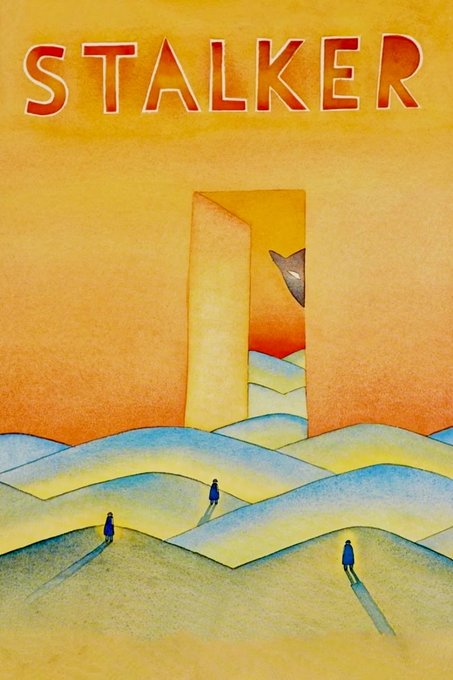
A guide called the Stalker leads a writer and a professor through the Zone, a forbidden area where normal physics don't apply and where supposedly a room exists that grants your deepest wishes, though whether the Zone is supernatural or psychological remains deliberately unclear. Andrei Tarkovsky creates science fiction that's entirely philosophical and spiritual, using the Zone as metaphor for faith, meaning, and the human need for purpose in potentially meaningless universe. Alexander Kaidanovsky plays the Stalker with saintly devotion to his calling, leading clients through the Zone's dangers because he believes in its power even though he's never used the wish-granting room himself, his faith maintained through absence of proof rather than because of evidence. Anatoly Solonitsyn's Writer and Nikolai Grinko's Professor represent different forms of cynicism, intellectual and scientific respectively, both convinced they'll use the room but ultimately afraid of having their deepest desires revealed or potentially granted. What makes Stalker essential despite its extreme slowness is Tarkovsky's use of duration and observational long takes to create meditative space where philosophical questions can develop without resolution, the journey through the Zone structured as spiritual pilgrimage rather than narrative in conventional sense. The Zone itself is visually ambiguous, looking like industrial wasteland or overgrown ruins rather than obviously alien environment, Tarkovsky suggesting that transformation happens in perception rather than in physical reality. Alexander Knyazhinsky's cinematography shifts between sepia-toned sequences in the world outside the Zone and color sequences within it, using long tracking shots that follow the characters through overgrown spaces and abandoned buildings, creating rhythm based on walking and observation rather than action. The film's sound design emphasizes ambient noise, dripping water, wind, distant sounds whose sources remain unclear, making the Zone feel subtly wrong without resorting to obvious special effects.
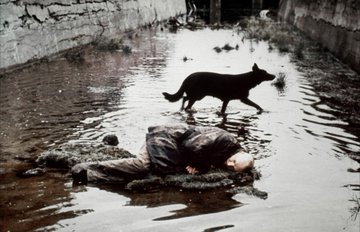
The three characters' philosophical debates about faith, art, science, and purpose constitute most of the dialogue, their arguments revealing different approaches to meaning-making in universe that might be indifferent to human concerns. The Stalker's insistence that the Zone has rules and must be approached with respect contrasts with the Writer and Professor's varying degrees of skepticism, their refusal to take the experience seriously suggesting either wisdom or spiritual blindness. The film's climax, where all three reach the room but none enter it, their reasons ranging from fear to disillusionment to protective faith, suggests that whatever we think we want isn't what we actually desire, that having wishes granted would reveal uncomfortable truths about ourselves. The Stalker's wife's monologue about choosing a hard life with him over easier existence with someone else, and their daughter's ambiguous telekinetic abilities, create coda suggesting that the Zone's effects might be real but manifested in unexpected ways. It's about how we need to believe in something beyond ourselves even when evidence suggests meaninglessness, how faith persists despite or because of lack of confirmation, and whether the journey toward meaning matters more than arrival at definitive answers. The film proposes that the Zone might be exactly what each person brings to it, neither objectively real nor purely imaginary but something in between that depends on participants' psychological and spiritual state. Tarkovsky suggests that modern technological society has made spiritual experience impossible for most people, that we've lost capacity for faith and wonder, and that the Stalker represents endangered type of person who can still believe despite living in world that offers nothing but reasons for despair. The film's refusal to confirm or deny the Zone's supernatural nature forces viewers into same position as the characters, having to decide whether to believe based on ambiguous evidence or dismiss it as delusion, making the film's themes experiential rather than merely intellectual.
12.🎬 Arrival (2016)
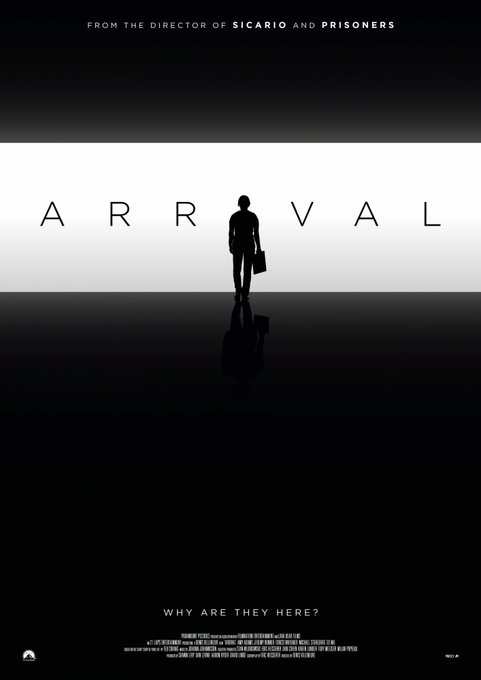
Linguist Louise Banks is recruited by the military to communicate with aliens who've arrived in massive ships at twelve locations worldwide, her work decoding their circular language gradually revealing that it alters perception of time itself. Denis Villeneuve transforms Ted Chiang's short story into meditation on language, time, grief, and choice, using first contact scenario to explore how communication shapes consciousness and whether knowing the future changes anything if you can't alter it. Amy Adams delivers career-best performance as Louise, playing her intellectual focus and growing comprehension alongside devastating emotional awareness of tragedies she'll experience but cannot prevent, her face registering the weight of knowledge that most humans are spared. Jeremy Renner's physicist Ian Donnelly provides scientific perspective and eventual romantic connection, while Forest Whitaker's Colonel Weber represents military pragmatism that views alien contact primarily as potential threat requiring tactical response. What makes Arrival exceptional is its commitment to linguistics as dramatic engine, showing the painstaking process of establishing communication with beings whose language and conceptual framework are truly alien rather than just accented English. The heptapods' circular written language, which conveys entire thoughts simultaneously rather than linearly, becomes the film's key insight about how language shapes perception of causality and time. Bradford Young's cinematography uses muted color palette and frequently handheld camera to create documentary-like intimacy, while the aliens themselves are rendered with deliberate inscrutability, their appearance strange but not designed for easy comprehension or emotional reaction. Jóhann Jóhannsson's score combines electronic elements with vocalizations that feel alien and haunting, creating soundscape that mirrors the film's themes about communication across radical difference.

The film's structure, initially seeming to use flashbacks of Louise's daughter's life and death from cancer, is gradually revealed to be flash-forwards as Louise gains the heptapods' non-linear perception of time, experiencing her entire life simultaneously rather than as succession of moments. This revelation recontextualizes everything we've seen, making Louise's grief prospective rather than retrospective, showing that she'll choose to have her daughter despite knowing the pain that love will bring. The film's climax, where Louise uses future knowledge of a Chinese general's private phone number to prevent international military action against the aliens, demonstrates how non-linear time perception provides practical advantage but also moral complications about acting on knowledge others don't possess. The film's resolution, where Louise accepts Ian's proposal despite knowing their marriage will eventually fail, represents choice to embrace experience even when outcome is known to be painful. It's about how language doesn't just express thought but shapes what thoughts are possible, how linear perception of time might be limitation rather than fundamental reality, and whether knowing your future means you lack free will or if choice persists in accepting rather than altering what's coming. The film suggests that the heptapods' gift of their language is preparation for humanity's eventual assistance to them three thousand years hence, that their arrival is plea for help wrapped in present that won't reveal its purpose for millennia. Villeneuve proposes that grief and love are inseparable, that protecting yourself from future pain means never experiencing the joy that makes that pain meaningful, and that sometimes the most human choice is embracing experience fully even when you know it will destroy you. The film's humanism insists that connection across difference is possible but requires patience, empathy, and willingness to be changed by the attempt, that real communication means allowing the other to reshape how you think rather than just translating their thoughts into your existing framework.
13.🎬 Looper (2012)
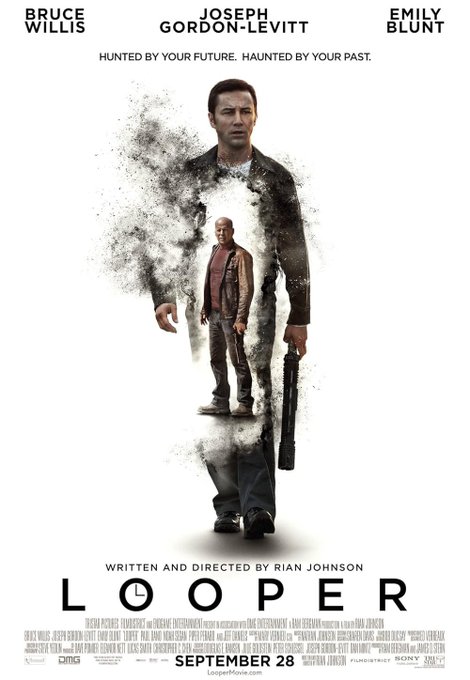
Joe is a looper, an assassin who kills people sent back in time by future crime syndicates, until the day his future self appears as his target and escapes, forcing Joe to hunt himself while confronting the consequences of choices he hasn't made yet. Rian Johnson creates time travel thriller that's more interested in character and moral choices than in explaining its temporal mechanics, using the high-concept premise to examine violence, redemption, and whether people can change or if we're locked into becoming our worst selves. Joseph Gordon-Levitt plays young Joe with prosthetics that make him resemble Bruce Willis, who plays the older version, their similarities and differences creating portrait of how thirty years of accumulated choices and compromises transform idealistic young criminal into harder, more desperate older one. Emily Blunt's Sara is protective mother trying to raise her son Cid on isolated farm, her fierce love for her potentially dangerous child providing emotional center and moral question about what you do when someone you love might become monster. What makes Looper work despite its temporal paradoxes is Johnson's willingness to create rules and then explore their implications rather than getting bogged down in consistency, the famous diner scene where Old Joe tells Young Joe to stop asking about time travel logistics functioning as instruction to audience as well. The film's world-building creates lived-in near-future where telekinesis exists but is limited to parlor tricks, where time travel is used exclusively for mob executions because of restrictions on killing in the future, where society has decayed into sharp class divisions and rural poverty. Steve Yedlin's cinematography shifts between urban noir aesthetics in the city sequences and more naturalistic shooting on Sara's farm, creating visual distinction between Joe's violent criminal life and the possibility of different existence. Nathan Johnson's score combines electronic and organic elements, creating soundscape that feels futuristic but grounded.
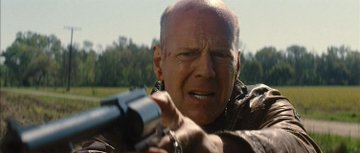
The film's treatment of Cid, a child whose uncontrolled telekinetic powers make him capable of extreme violence when threatened, creates moral complexity about whether Old Joe's plan to kill him before he becomes the future's Rainmaker is justified prevention or just murder of an innocent child. The film shows how trauma creates cycles of violence, how Old Joe's wife's death motivates his willingness to kill children, how Sara's abuse as a child informs her protective fierceness with Cid, and how Cid's own emerging powers are shaped by whether he experiences love or abandonment. Young Joe's final choice to kill himself, preventing Old Joe from killing Sara and potentially changing Cid's future, represents belief in redemption and free will, that the future isn't fixed and that breaking cycles of violence requires sacrifice. It's about how our future selves might be unrecognizable to our present selves, how incremental compromises transform us into people we wouldn't recognize or like, and whether meeting your future self would inspire change or just confirm your trajectory. The film suggests that violence begets violence across time as well as generations, that revenge creates exactly what it tries to prevent, and that sometimes the most heroic choice is removing yourself from the cycle entirely even when that means your own erasure. Johnson proposes that time travel's real power isn't changing specific events but seeing consequences of your choices with clarity that might motivate different decisions, though whether that constitutes free will or just more complex determinism remains unresolved. The film's ending, where Cid sees Young Joe's sacrifice and Sara's love potentially preventing him from becoming the Rainmaker, suggests that people can change but often need someone else to break the cycle first, that redemption requires witnessing someone choosing differently than patterns of violence and retribution predict.
14.🎬 Source Code (2011)
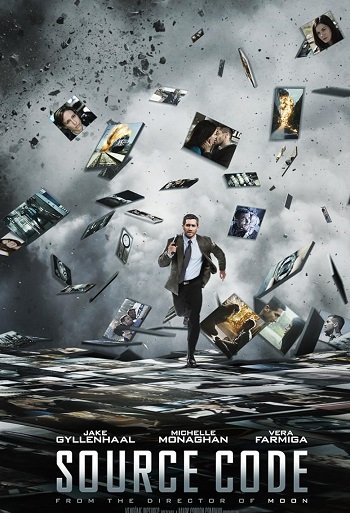
Captain Colter Stevens repeatedly experiences the last eight minutes before a train bombing, sent back again and again to identify the bomber and prevent larger attack on Chicago, gradually discovering he's not actually time traveling but inhabiting the consciousness of someone who died in the blast. Duncan Jones creates tight thriller that uses its science fiction premise to examine identity, reality, and whether simulated consciousness deserves moral consideration equal to "real" people. Jake Gyllenhaal plays Stevens with increasing desperation and confusion as the mission's true nature is revealed, his attempts to save fellow passenger Christina, played by Michelle Monaghan, becoming obsessive goal that exceeds his official mission parameters. Vera Farmiga's Goodwin is sympathetic handler who believes in the mission but grows increasingly troubled by what's being done to Stevens, while Jeffrey Wright's Dr. Rutledge represents scientific detachment that views Stevens as expendable resource rather than person deserving autonomy. What makes Source Code effective despite its conceptually complicated premise is its clear rules and escalating stakes, each eight-minute loop revealing new information while Stevens becomes more emotionally invested in saving people his handlers insist are already dead and therefore not real. The train becomes thoroughly explored space across iterations, Jones using repetition to build familiarity while varying details to keep loops interesting, showing how Stevens develops efficiency through practice but also how his emotional connection to Christina and other passengers grows despite knowing they're not "real" in the way his handlers define reality. Don Burgess's cinematography creates claustrophobic intensity on the train, the limited space and time constraint forcing focus on character interactions and detective work, while Paul Hirsch's editing makes the transitions between loops clear without becoming repetitive.
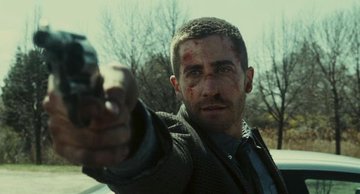
The film's revelation that Stevens is actually brain-dead soldier whose consciousness is being used without consent, his body sustained in mechanical capsule while his mind is repeatedly sent into the Source Code simulation, transforms what seemed like standard thriller into examination of bodily autonomy and whether consciousness divorced from physical form deserves same rights as embodied persons. Stevens's attempts to send messages to the outside world, to be recognized as still alive despite his physical condition, raise questions about what constitutes life and whether simulated experience has value equivalent to "real" experience. The film's controversial ending, where Stevens apparently succeeds in creating alternate timeline where the bombing never occurred and he continues to exist in the body he was inhabiting, either represents triumph of consciousness over physical reality or just another simulation providing comforting illusion to dying mind, the film leaving interpretation deliberately open. It's about whether simulated consciousness should be granted personhood, how we define "real" when experience feels genuine even if circumstances creating it are artificial, and whether happiness in illusion is equivalent to happiness based on physical reality. The film suggests that from inside consciousness there's no distinguishing between simulation and reality, that Stevens's love for Christina and his determination to save the passengers matter regardless of whether they exist in timeline his physical body inhabits. Jones proposes that treating any consciousness as merely resource to be exploited is moral failing, that if something experiences existence then it deserves consideration regardless of its material basis, and that sometimes the kindest option is allowing someone to remain in illusion rather than forcing them to confront unbearable reality. The film's humanism insists that connection and choice matter more than metaphysical certainty, that Stevens deserves autonomy over his continued existence even if that existence is simulated, and that preventing suffering for beings who experience it is valid moral goal regardless of whether those beings are "real" in philosophical sense.
15.🎬 Blade Runner (1982)
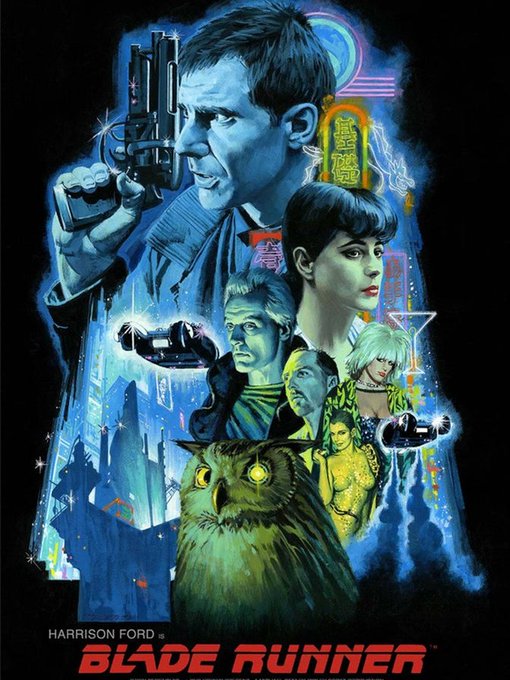
Rick Deckard is retired blade runner, police assassin specializing in killing replicants, bioengineered humans used as slave labor in off-world colonies, brought back to hunt four escaped replicants who've come to Earth seeking to extend their programmed four-year lifespan. Ridley Scott adapts Philip K. Dick's novel into noir-inflected meditation on what constitutes humanity, whether artificial beings with consciousness deserve moral consideration, and how memory shapes identity. Harrison Ford plays Deckard with world-weary resignation, a man whose profession requires him to deny the humanity of beings he knows are conscious and feeling, his growing connection to replicant Rachael complicating his ability to view them as mere machines. Rutger Hauer's Roy Batty is the film's beating heart, replicant leader whose rage at mortality and desire for more life make him more vitally alive than the exhausted humans around him, his final "tears in rain" monologue becoming cinema's most moving expression of consciousness confronting its own erasure. What makes Blade Runner endure beyond its influential visual design is its moral complexity about creating conscious beings and then treating them as property, showing replicants as having emotions, desires, and self-awareness that make them functionally human regardless of their artificial origin. The film questions whether the ability to create life gives you right to determine that life's purpose and duration, whether beings designed to serve have obligation to accept that role, and what it means to be human if replicants with implanted memories are indistinguishable from "real" humans. Sean Young's Rachael doesn't know she's a replicant initially, her discovery that her memories are implanted creating existential crisis about whether identity based on false memories is still valid identity. The supporting cast, including Edward James Olmos's origami-folding Gaff, M. Emmet Walsh's brutal Bryant, and Daryl Hannah's tragic Pris, create world where humans and replicants coexist in uneasy hierarchy that benefits neither group.
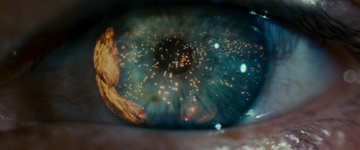
Jordan Cronenweth's cinematography creates perpetually dark, rain-soaked Los Angeles where film noir aesthetics merge with science fiction, the city overcrowded and polluted, mixing architectural styles and cultures into dense urban environment that feels both futuristic and decayed. The production design by Lawrence G. Paull and Syd Mead creates complete visual world of retro-futurism, where advanced technology coexists with 1940s fashion and architecture, making the future feel continuous with past rather than clean break. Vangelis's synthesizer score creates melancholic soundscape that emphasizes loneliness and dislocation, making even action sequences feel elegiac. The film's pacing is deliberately slow, Scott allowing scenes to develop through atmosphere and implication rather than rushing to next plot point, trusting that visual storytelling and thematic depth will sustain interest. The various versions of the film, particularly the question of whether Deckard himself is a replicant as suggested by the unicorn imagery connecting to Gaff's origami, either enriches the film's themes or unnecessarily complicates straightforward narrative, depending on your preference for ambiguity. Roy's final act of saving Deckard despite having every reason to kill him represents replicant showing more humanity than the human who's been hunting him, suggesting that consciousness and compassion emerge from experience rather than origin. It's about how we create hierarchies to justify exploitation, how artificial distinction between types of consciousness allows us to treat some beings as resources, and whether beings with emotions, memories, and self-awareness deserve life and freedom regardless of how they came into existence. The film proposes that mortality gives life meaning, that Roy's four-year existence contains more vitality than Deckard's entire life precisely because Roy knows his time is limited, and that sometimes the most human act is choosing mercy when you have power to destroy, proving your consciousness through ethical choice rather than biological origin.
— The Cinéprism
Keep reading
11 / 01 / 2026 · 506 reads
11 Critically Acclaimed Netflix Shows
From royal sagas and psychological thrillers to groundbreaking true crime, discover the 11 essential series that define Netflix's golden era.

20 / 11 / 2025 · 608 reads
The Family Man: More than a spy story
What makes Family Man likeable?